
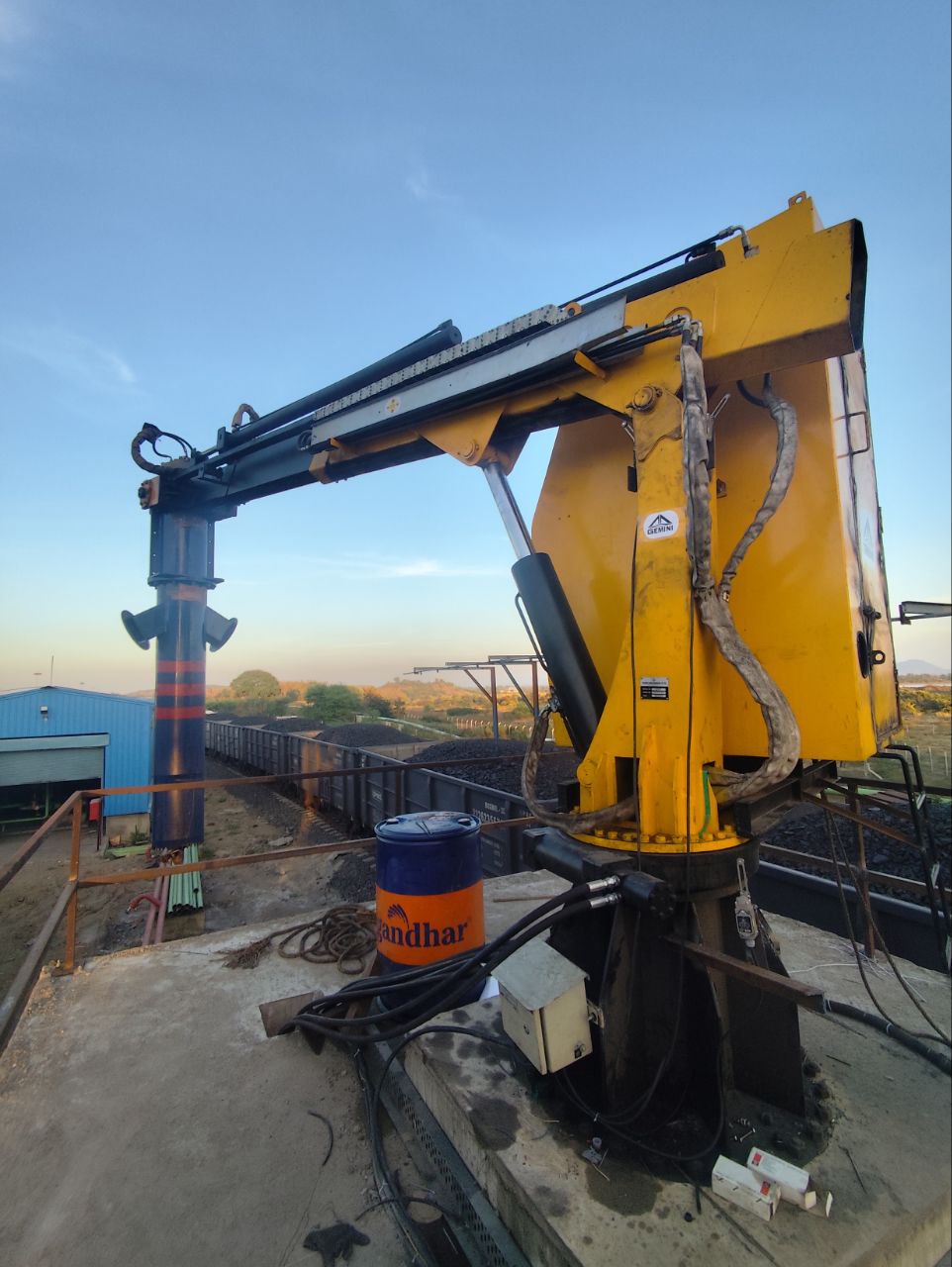
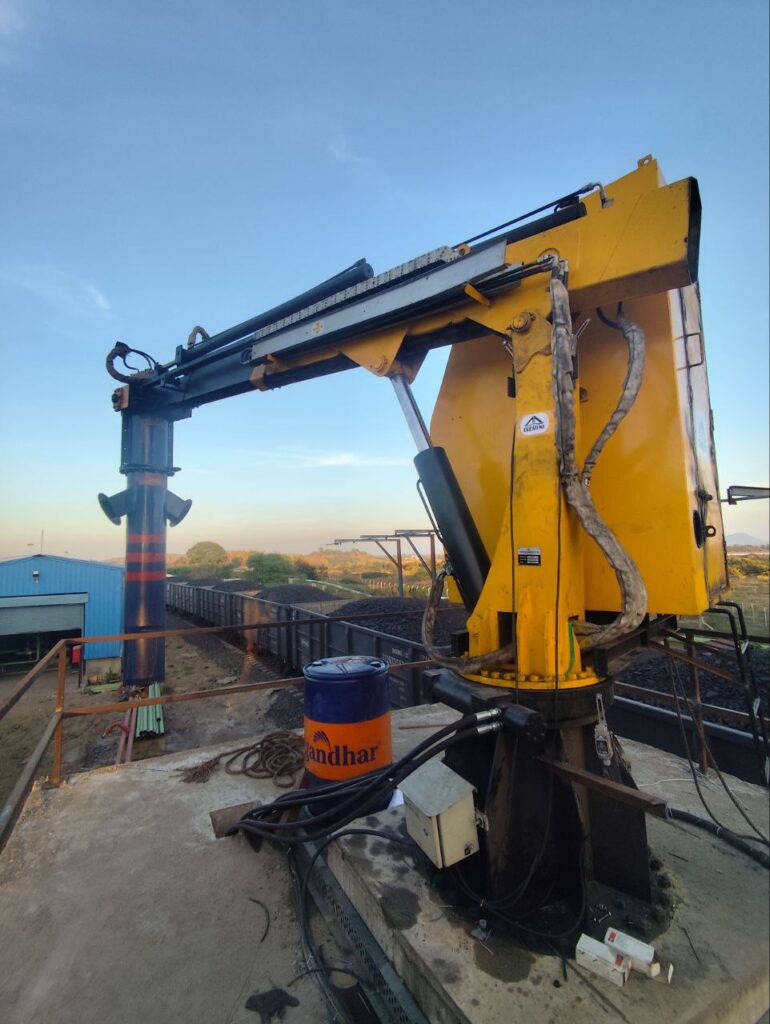
In bulk material industries, sampling accuracy defines decision quality. Whether it is coal, minerals, ores, coke, or other granular commodities, one inconsistent sample can distort test results, impact commercial settlements, and raise compliance risks. This is where the stationary auger proves its value—delivering controlled, repeatable, and representative sampling at fixed operational points.
Unlike manual or semi-random methods, a stationary auger sampling system is engineered to remove human bias and environmental variability, ensuring every sample truly reflects the bulk material being handled.
What Is a Stationary Auger?
A stationary auger is a permanently installed mechanical sampling device designed to extract material from bulk consignments using a rotating auger screw. Mounted at a fixed location—such as truck loading bays, rail wagon sampling points, or yard transfer zones—the system enables consistent sampling without repositioning equipment.
The auger penetrates the bulk material vertically or at a defined angle, cutting through layers and lifting material uniformly to the collection point. This method ensures depth-wise representation, which is critical for reliable laboratory analysis.
How Stationary Auger Sampling Works
- Fixed Installation Point
The stationary auger is installed at a predefined sampling location, ensuring uniformity across every load and shift. - Controlled Auger Penetration
The rotating auger penetrates the bulk material to a defined depth, extracting increments from within the mass rather than just the surface. - Uniform Sample Extraction
Material travels along the auger flights and is discharged into a sample container or further sample handling system. - Repeatable Sampling Cycles
Each sampling cycle follows the same mechanical motion and depth, delivering consistency across batches and consignments.
This controlled approach makes stationary auger sampling ideal for routine quality control and contractual testing.
Why Stationary Auger Sampling Matters
1. Representative Sampling
Bulk materials are rarely uniform. A stationary auger collects material from within the load, reducing segregation bias and improving test reliability.
2. Consistency Across Operations
Because the auger remains fixed and operates on defined parameters, sampling results remain comparable across time, operators, and locations.
3. Operational Efficiency
Stationary auger systems reduce manual intervention, shorten sampling time per vehicle, and improve throughput at busy sampling stations.
4. Improved Safety
With no need for personnel to climb trucks or wagons, stationary auger sampling significantly lowers operational and safety risks.
5. Compliance and Audit Readiness
Repeatable mechanical sampling supports compliance with internal QA protocols, customer specifications, and regulatory expectations.
Applications of Stationary Auger Systems
A stationary auger is widely used wherever bulk material quality verification is critical:
- Coal and fuel sampling at power plants
- Mineral and ore sampling at mines and beneficiation plants
- Coke and metallurgical material sampling
- Truck and rail wagon sampling stations
- Ports, yards, and logistics terminals
In all these environments, accurate sampling directly impacts commercial confidence and operational credibility.
Stationary Auger vs. Manual Sampling
| Aspect | Manual Sampling | Stationary Auger Sampling |
|---|---|---|
| Sampling depth | Limited | Controlled and repeatable |
| Operator dependency | High | Minimal |
| Safety risk | High | Low |
| Consistency | Variable | High |
| Audit defensibility | Weak | Strong |
This comparison highlights why industries are increasingly shifting toward stationary auger systems for critical sampling operations.
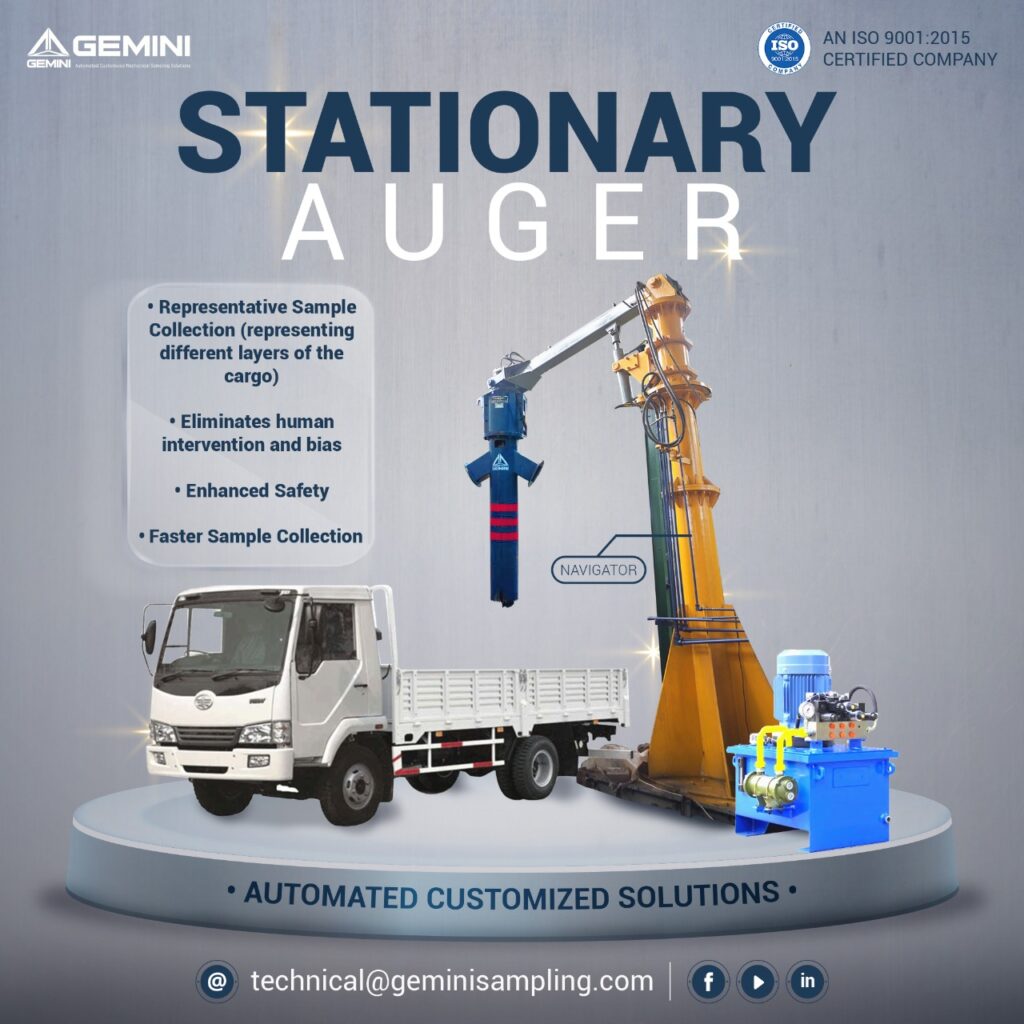
Why Choose a Stationary Auger from Gemini Sampling Solutions
Gemini’s stationary auger systems are engineered for industrial durability, precision mechanics, and long-term reliability. Designed to integrate seamlessly into existing material handling workflows, these systems support accurate sampling without disrupting operations.
By combining mechanical robustness with practical usability, Gemini’s stationary auger solutions help organizations build confidence in their sampling, testing, and quality control processes.
Conclusion
In bulk material testing, accuracy begins at the sampling point. A stationary auger transforms sampling from a routine task into a controlled, defensible, and high-precision operation. By ensuring representative extraction, consistent methodology, and improved safety, stationary auger sampling systems form the backbone of reliable quality assessment.
For industries where material quality drives performance, compliance, and trust, investing in a robust stationary auger sampling system is not an option—it is a necessity.